




Relocating is a life-changing decision that impacts every aspect of a person’s daily routine. Residents often choose to leave their home state when their current environment no longer aligns with their long-term career goals or personal needs. Some seek to escape high property taxes or expensive housing markets, while others prioritize a new lifestyle near family members or in a warmer climate. No matter the motivation, ensure you have the right moving team on your side.
Alliance Moving & Storage supports these transitions as a family-operated moving company based in Chicago. We handle the physical demands of a move by providing packing materials and secure storage facilities. We focus on handling the logistics of long-distance or interstate moves, so households can plan their transition with fewer operational concerns.
Why People Consider Moving to Another State

A new city often means new jobs, relationships, cultural experiences, and perspectives. Relocation usually begins with evaluation rather than urgency. Before committing to a move, most people review how well their current state supports long-term plans related to work, family, finances, and daily living.
Instead of focusing on a single issue, many relocation decisions develop from a combination of pressures and comparisons, such as:
- Whether local income levels realistically match current and future expenses.
- How stable local employment options appear over the next several years.
- Whether housing options allow long-term affordability or ownership.
- How well the area supports family needs, healthcare access, and education.
- Whether the local lifestyle still aligns with personal priorities.
When multiple areas fall short simultaneously, relocating to a different state becomes a structured adjustment aimed at improving long-term stability rather than a reaction to short-term inconvenience. Large metro areas like Chicago influence relocation trends.
Practical Reasons to Move to a New State
The following list is a roundup of the most common reasons people relocate across the country. Each point represents a long-term consideration tied to stability, planning, and quality of life rather than a short-term impulse or temporary dissatisfaction.
1. Better Job Opportunities
Employment access continues to be a leading reason to move to a new state. Regions with expanding industries often provide more stable roles, higher demand for skilled workers, and clearer advancement paths. Remote work flexibility allows a growing portion of workers to choose relocation based on lifestyle rather than proximity to an office.
For many professionals, relocation supports long-term income security, improved benefits, and access to employers that better align with their experience and career direction.
2. Lower Cost of Living

Differences in the cost of living have a direct impact on financial stability. States with lower costs of living allow income to cover housing, transportation, and daily expenses more effectively. When there’s less financial pressure, budgeting flexibility improves, and it’s easier to reach long-term savings goals.
3. Lower Housing Costs
High housing costs push many households to explore other regions. Many people relocate as part of a downsizing plan. States offering lower housing costs and affordable housing options improve access to homeownership and reduce rent-related strain. Housing affordability often determines whether relocation leads to lasting financial balance instead of temporary relief.
4. Career Growth and Advancement
Some states offer stronger alignment between workforce demand and professional skill sets. Individuals seeking career growth often relocate to regions where advancement paths, training opportunities, and industry networks remain active. This approach supports sustained career development instead of short-term job changes.
5. Proximity to Family Members
Living closer to family members is another common factor for wanting to move to another state. It improves daily coordination, caregiving arrangements, and emotional support. This reason becomes more common as families grow, children enter school, or parents need additional help. Proximity often strengthens long-term family stability.
6. Improved Healthcare Access

Healthcare availability and quality vary significantly by region. Better healthcare access influences relocation decisions for families, retirees, and individuals managing ongoing medical needs. Shorter travel times, access to specialists, and stronger hospital systems often outweigh convenience factors when choosing a new location.
7. Education and School Options
It’s common for parents to relocate to access stronger school systems or a new school district that aligns with academic priorities. Education quality remains one of the most consistent relocation drivers, especially for families planning long-term stability and improved outcomes for children.
8. Climate and Weather Preferences
Weather conditions influence daily routines, health, and overall comfort. A warmer climate or more predictable seasonal patterns attract people who want to be outside consistently. Climate stability often supports long-term lifestyle planning and personal well-being.
9. A Fresh Start and Personal Growth
A fresh start allows individuals and families to reset routines, establish new habits, and expand their social circle. A new community can support personal growth by removing limitations tied to familiar environments and encouraging new social and professional connections.
10. Lifestyle Fit and Social Opportunities
Cultural access, recreation, and social opportunities differ by region. When lifestyle preferences evolve, relocation helps restore balance between work, personal interests, and community involvement. Social compatibility often determines whether a location feels sustainable over time.
How Relocation Can Improve Life and Where to Take Caution
While there are many benefits to relocating, there are also adjustment challenges to consider. Evaluating both sides supports realistic expectations.
Benefits of Moving to a New State
The benefits of moving to a new state often include improved financial balance, broader career prospects, and access to new opportunities. Many people experience a stronger social life, an expanded community, and greater alignment between income and expenses. These benefits build gradually and don’t appear immediately.
Risks and Difficulties of Moving to Another State
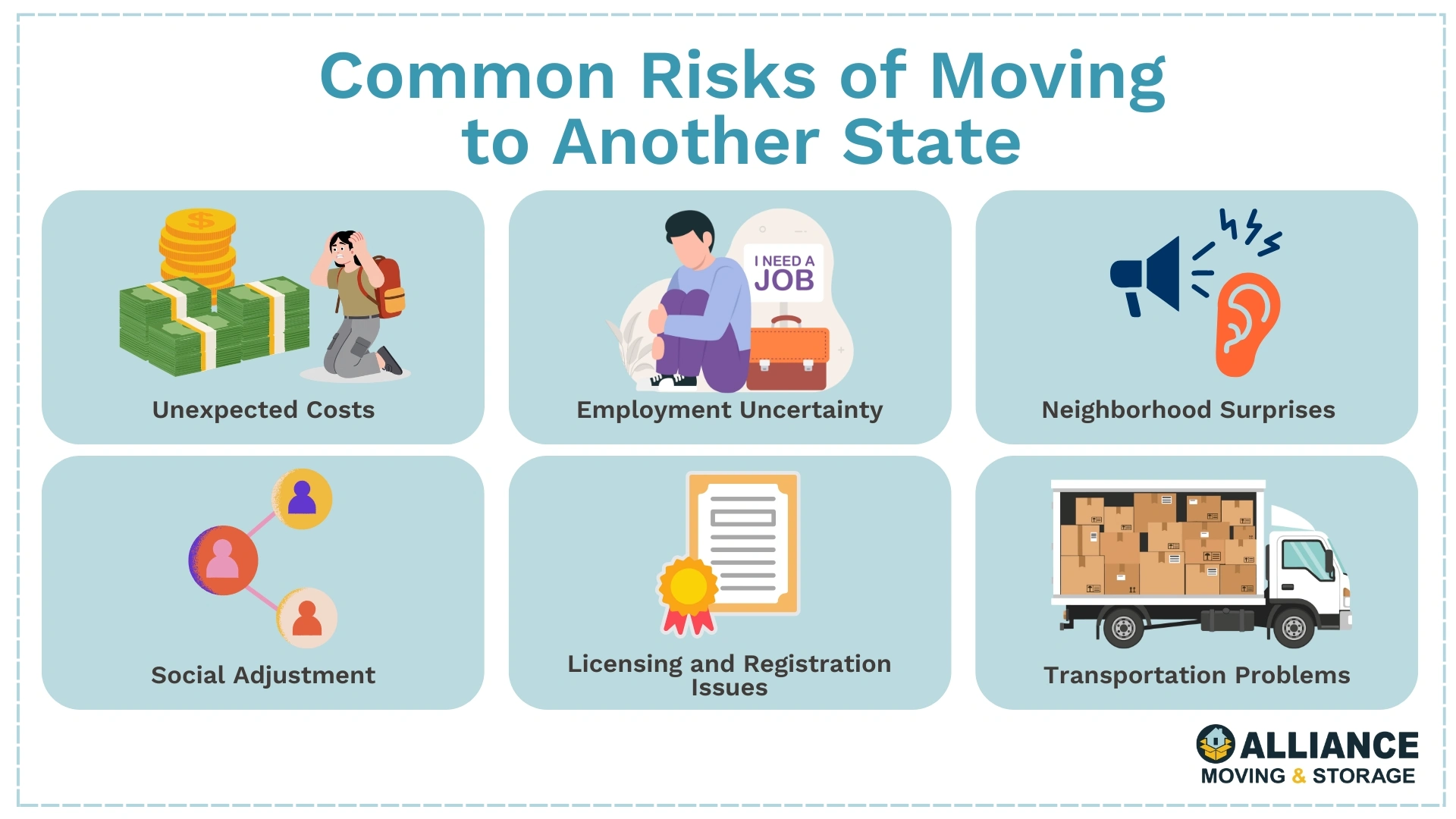
Despite clear benefits, interstate relocation carries challenges that should not be underestimated. Many difficulties appear after the move, rather than during planning. A long-distance relocation adds logistical challenges.
Financial risk during transition
Unexpected expenses often come up during relocation, such as temporary housing, storage fees, delayed employment income, or higher-than-expected utility costs. Without planning, a gap between jobs can strain savings. Professional interstate moves can cost between $2,500 and $18,000, and DIY options start around $1,000.
Employment uncertainty
Job offers may change, start dates may shift, or local job markets may differ from expectations. Relying on assumptions rather than confirmed employment can create financial pressure after arrival.
Housing and neighborhood mismatch
A neighborhood that looks appealing online may not be the same in reality. Noise levels, traffic patterns, school quality, or local services may not align with expectations, especially when relocating from far away.
Social and emotional adjustment

Leaving established friends and support networks can lead to isolation during the early months. Building a new social circle takes time and may affect emotional well-being, particularly for families and older adults.
Administrative and legal complications
Moving to another state requires updates to driver’s licenses, vehicle registration, insurance policies, voter registration, and healthcare providers. Most states require individuals moving to a new state to register their vehicles and obtain a new driver's license within 30-90 days. Delays or missed deadlines can create legal or financial issues.
Logistical risks during the move
Poor planning or unreliable movers can lead to damaged property, lost items, or delayed delivery. Choosing experienced professionals and using proper packing materials, especially for fragile items, reduces these risks but does not eliminate them.
Awareness of these risks supports better preparation.
A Clear Path Toward a New Place
If you’re simply itching for a change or you’re motivated by something deeper, relocation may be for you. Whether driven by career, family, finances, or lifestyle, moving to another state marks a significant step toward a new life.
Clear planning and experienced support are the foundations of reducing uncertainty. Alliance Moving & Storage helps households with structured interstate relocation services focused on coordination and reliability. We handle nearly 30 moves daily, so we know what it takes to be successful. Reach out to our team for guidance.




.jpg)